
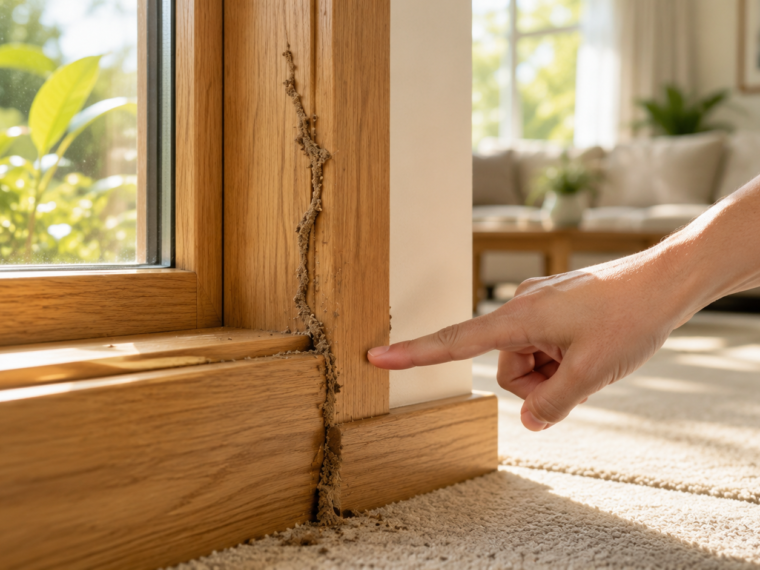
Termites are quiet workers. They don’t announce themselves the way a leaky roof or a broken window does, and by the time most people notice something is wrong, the little insects have often been busy for months — sometimes years. That’s exactly what makes them so costly. The good news is that termites almost always leave clues behind, and once you know what to look for, spotting the early termite warning signs becomes second nature. This guide walks you through the telltale signals so you can catch a problem while it’s still small and manageable.
Whether you’ve just bought your first home or you’ve lived in the same place for decades, a little awareness goes a long way. Let’s break down what to watch for, where to look, and what to do next.
Why Termites Are Such a Big Deal
Termites feed on cellulose, which is the main building block of wood — and by extension, a huge portion of your house. Structural beams, floor joists, window frames, and even the paper backing on drywall are all fair game. A mature colony can contain hundreds of thousands of termites, all eating around the clock. Because they work from the inside out, a beam can look perfectly fine on the surface while being hollowed out underneath.
The financial sting is real. Termite damage is rarely covered by standard homeowner’s insurance because it’s considered preventable through maintenance. That means the repair bill usually lands squarely on you. Catching an infestation early can be the difference between a modest treatment and a major structural repair.
The Most Common Termite Warning Signs
Termites give themselves away in several ways. Here are the signals homeowners spot most often:
- Mud tubes. Subterranean termites build pencil-width tunnels made of soil and saliva to travel between their nest and your home. Look for them along foundation walls, in crawl spaces, and where the ground meets wood.
- Discarded wings. After termites swarm to start new colonies, they shed their wings. Finding small piles of translucent wings near windowsills, doors, or light fixtures is a classic red flag.
- Hollow-sounding wood. Tap on a wooden beam, baseboard, or door frame. If it sounds papery or hollow, termites may have eaten away the inside.
- Frass (termite droppings). Drywood termites push out tiny wood-colored pellets that look like sawdust or coffee grounds, often piling up beneath infested wood.
- Bubbling or uneven paint. Paint that looks blistered or is peeling for no obvious reason can signal moisture and termite activity underneath.
Any single one of these termite warning signs is worth investigating. Two or more together should prompt a professional inspection sooner rather than later.
Where to Look Around Your Home
Termites gravitate toward moisture and easy access to wood. When you do a walk-through, pay special attention to these spots:
- The foundation and crawl space. This is ground zero for subterranean termites. Scan for mud tubes and soft, damaged wood near the base of the house.
- Basements and utility areas. Warm, humid, and often ignored — the perfect environment. Check around water heaters, pipes, and support posts.
- Window and door frames. These wooden edges are common entry points. Look for shed wings and test the wood for that hollow sound.
- Attics. Drywood termites can nest high up. Inspect rafters and any stored wood or cardboard boxes.
- The yard. Woodpiles, old tree stumps, and mulch pressed against the house all invite termites closer to your foundation.
Doing a quick check once or twice a year — especially in spring, when termites tend to swarm — keeps you ahead of trouble.
Simple Steps to Prevent an Infestation
Prevention is far cheaper than treatment. A few habits dramatically lower your risk:
- Keep firewood, lumber, and mulch at least a few feet away from your foundation.
- Fix leaky faucets, pipes, and gutters so moisture doesn’t accumulate near the house.
- Make sure crawl spaces and basements are well ventilated and dry.
- Seal cracks in your foundation and around utility lines where termites could sneak in.
- Keep soil and wood siding from making direct contact — leave a visible gap.
When to Call a Professional
If you spot mud tubes, discarded wings, or frass, don’t wait. A licensed pest control professional can confirm whether you have an active infestation, identify the species, and recommend the right treatment — whether that’s liquid barrier treatments, bait systems, or targeted spot treatments. Many companies also offer annual inspections, which are a smart investment if you live in a termite-prone region.
It’s also worth scheduling an inspection before you buy a home. A termite check is a small cost compared with inheriting someone else’s hidden damage.
Stay One Step Ahead
Termites thrive on being unnoticed, but they’re not invisible. By learning the key termite warning signs — mud tubes, shed wings, hollow wood, frass, and blistered paint — and giving your home a regular once-over, you put yourself firmly in control. A few minutes of looking today can save you thousands of dollars and a world of stress down the road. Trust your instincts: if something looks off, investigate it early, and don’t hesitate to bring in a pro when the signs point that way. Your home is worth protecting, and a little vigilance keeps it standing strong for years to come.