
Brezid is reader-supported. When you buy through links on our site, we may earn a commission. As an Amazon Associate I earn from qualifying purchases.
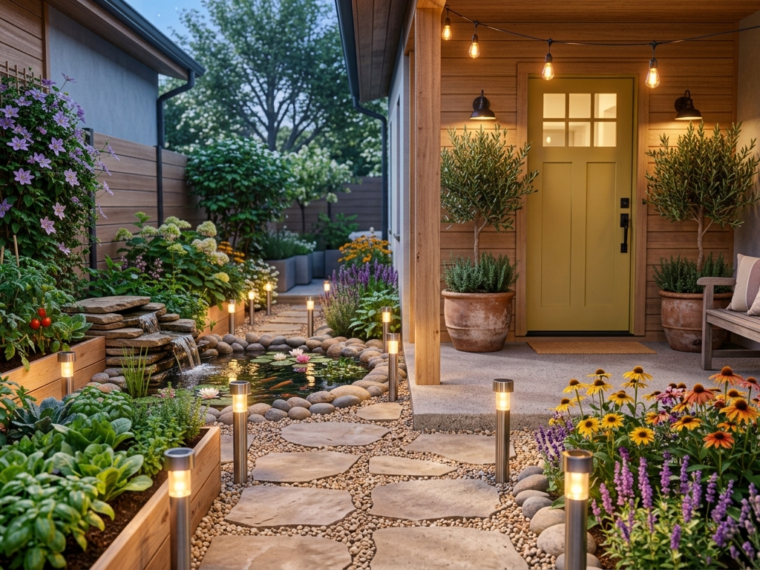
There’s something quietly satisfying about a garden that lights itself after sunset. Pathways glow, the patio feels warm, and you never touch a switch or add a cent to the electricity bill. That’s solar lighting at its best — it soaks up sun all day and hands it back at night, free.
The catch is that solar lights vary enormously in quality, and the difference isn’t visible in the product photo. Some are still going strong in year five; plenty are dark by the second winter. Here’s how to tell them apart before you buy.
A Note on Brands
We’re being deliberately light on brand names here, and it’s worth explaining why. A large share of solar garden lighting is sold by short-lived marketplace brands that appear, sell for a season, and vanish — naming them would date this article within months and send you after products that no longer exist.
Established names worth knowing include Gama Sonic (long-standing solar specialist, higher end), Ring (solar pathlights that integrate with their ecosystem), and Brightech (solar string lighting). Beyond those, the specifications below matter far more than the label on the box.
Types of Solar Garden Light
- Path lights — short stakes lining walkways and driveways, casting a pool of light at ground level. The workhorse category.
- String and fairy lights — draped over a patio, pergola or fence for café-style ambience.
- Spotlights — brighter and adjustable, for uplighting trees, walls or architectural features.
- Deck and step lights — low-profile fixtures mounted on stairs, railings and posts. Genuinely a safety item, not just decoration.
- Decorative lanterns — standalone pieces that work as daytime objects too.
A mix of two or three types nearly always looks better than a row of identical stakes.
The Five Specs That Decide Whether They Last
- Battery type. The single biggest predictor of lifespan. LiFePO4 is best, lithium-ion good, NiMH acceptable, and unspecified NiCd is a red flag. Also check whether the battery is replaceable — a cheap replacement cell can add years to a light that would otherwise be landfill.
- Panel type. Monocrystalline outperforms polycrystalline, particularly in weak winter light and partial shade. Bigger panel area matters as much as the technology.
- Brightness (lumens). Path lights need only 5–20 lumens — brighter is genuinely worse, creating glare and destroying night vision. Spotlights and patio lighting want 50+.
- Weather rating. IP65 minimum. Below that, sprinklers and driving rain will get inside. IP44 is for covered porches only.
- Materials. Stainless steel, powder-coated aluminium and thick ABS survive. Thin resin cracks in the first hard frost.
Separate Panel or Integrated?
This decision gets overlooked and it matters more than almost anything else. Lights with the panel built into the fixture must sit in full sun — which is frequently not where you want light. Lights with a panel on a cord let you place the fixture in a shady, attractive spot and put the panel somewhere it actually charges.
If any part of your planned lighting run is shaded — under a tree, beside a north-facing wall, below a fence line — buy separate-panel models for those positions.
Placement That Actually Works
- Panels need at least six hours of direct sun. Shade is the number one reason solar lights disappoint.
- Space path lights six to eight feet apart for a continuous glow rather than bright-and-dark gaps.
- Wipe panels every few weeks — dust and pollen block a surprising amount of charge.
- Angle spotlights slightly upward to graze textured walls or foliage.
- Keep lights away from street lamps and porch lights; ambient light can confuse the dusk sensor into staying off.
Getting a Full Season Out of Them
Charge new lights in full sun for two days with the switch off before first use — this conditions the battery and noticeably improves how long they run. In winter, either bring decorative pieces indoors or keep snow off the panels. And when a light starts fading, replace the battery before you replace the light; it’s the battery nine times out of ten.
The Realistic Expectation
Solar lighting is genuinely excellent for ambience, path definition and safety. It is not equivalent to mains-powered lighting for brightness, and won’t run reliably all night in mid-winter at northern latitudes. Buy it for atmosphere and gentle wayfinding and you’ll be delighted; buy it expecting floodlight performance in January and you won’t be.
Start with a set of path lights along your most-used route, see how they perform through a season, and build from there. Solar path lighting is also one of the cheaper curb appeal upgrades that add real home value — and if you like the effect, solar water features work on exactly the same principle.
Solar lighting models change frequently — check current specifications, particularly battery type and IP rating, before buying.