Composting is one of those small habits that quietly changes how you see your kitchen scraps. Instead of tossing banana peels and coffee grounds into the trash, you turn them into rich, crumbly soil that your garden will love. But if you’ve ever stood in a garden center staring at the options, you know the real question isn’t whether to compost — it’s how.
There’s no single “right” answer, which is exactly why it helps to compare the best composting systems side by side. In this guide we’ll look at tumblers, bins, and DIY setups so you can find the one that fits your space, your schedule, and how quickly you want that finished compost.
Compost Tumblers: Fast and Tidy
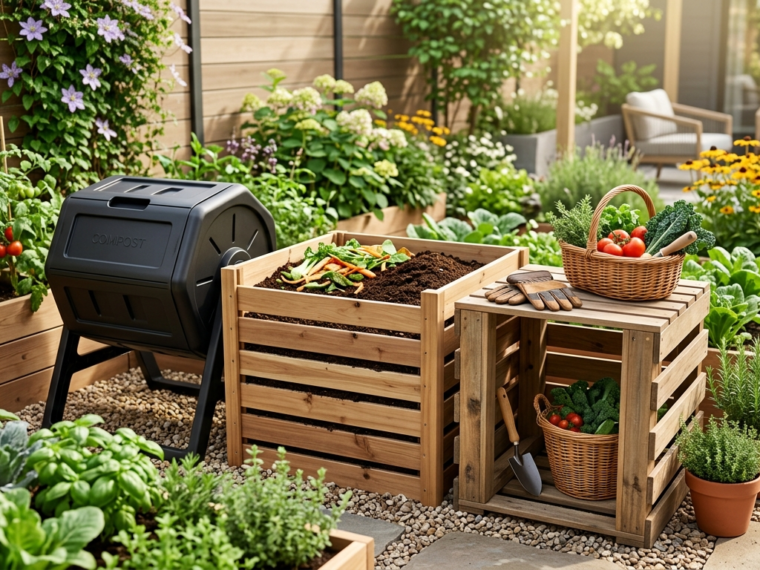
A compost tumbler is a sealed drum mounted on a frame so you can spin it with a quick turn of the handle. That spinning is the whole appeal — it mixes and aerates your scraps without you ever picking up a pitchfork.
Here’s why so many gardeners love them:
- Speed: Regular turning keeps things hot, so you can get usable compost in as little as four to six weeks.
- Pest resistance: The enclosed drum keeps rodents and raccoons out.
- Clean look: Tumblers stay neat, which makes them a good fit for smaller or more visible yards.
The trade-offs? Tumblers hold less than a big open pile, and they cost more upfront. But if you want fast results without much mess, a tumbler is hard to beat.
Compost Bins: Steady and Roomy
Stationary compost bins are the workhorses of the backyard. They’re usually a simple enclosed container — plastic, wood, or wire — that sits directly on the ground so worms and microbes can move in freely.
Bins shine when you have a steady stream of yard waste and kitchen scraps. They hold a good amount, they’re affordable, and that contact with the soil invites all the helpful organisms that break material down. The catch is that they work more slowly than tumblers and need occasional turning with a fork to keep air flowing.
If you’re patient and want a low-cost system that quietly does its job, a bin is a dependable choice. Many gardeners even keep two — one “cooking” while they fill the other.
DIY Compost Setups: Budget-Friendly and Flexible
Sometimes the best composting systems are the ones you build yourself. A DIY setup can be as simple or as clever as you like, and it costs next to nothing.
A few popular approaches:
- Pallet bins: Screw four wooden pallets into a square and you’ve got a roomy, breathable compost corner for almost free.
- Wire cylinders: A ring of hardware cloth or chicken wire makes a light, airy pile that’s easy to lift and turn.
- Trash-can composters: Drill air holes in an old lidded bin, and you have a rodent-resistant composter you can even roll to mix.
DIY setups reward a little creativity. They may not look as polished as a store-bought unit, but they let you match the size to your space and scale up whenever you need to.
How to Pick the Right System for You
Choosing between these comes down to a few honest questions. How much space do you have? How fast do you want finished compost? And how hands-on do you want to be?
Here’s a simple way to think about it:
- Small yard, want speed, don’t mind spending a little more: Go with a tumbler.
- Plenty of yard waste, patient, budget-minded: A stationary bin is your friend.
- Love a project and want to spend as little as possible: Build a DIY setup.
Whichever you choose, the basics stay the same: balance your “greens” like food scraps and grass with “browns” like dry leaves and cardboard, keep the pile as damp as a wrung-out sponge, and give it air now and then. Get that mix right and any of these systems will reward you.
Turning Scraps Into Garden Gold
At the end of the day, the best composting systems are the ones you’ll actually use. A tumbler that sits unused helps no one, and neither does a DIY bin you never fill. Match the setup to your real life — your space, your pace, your patience — and composting becomes second nature.
Start small if you need to, keep it simple, and before long you’ll be scooping out dark, earthy compost to feed your plants. Your garden gets healthier, your trash gets lighter, and you get the quiet satisfaction of turning yesterday’s scraps into tomorrow’s blooms.