
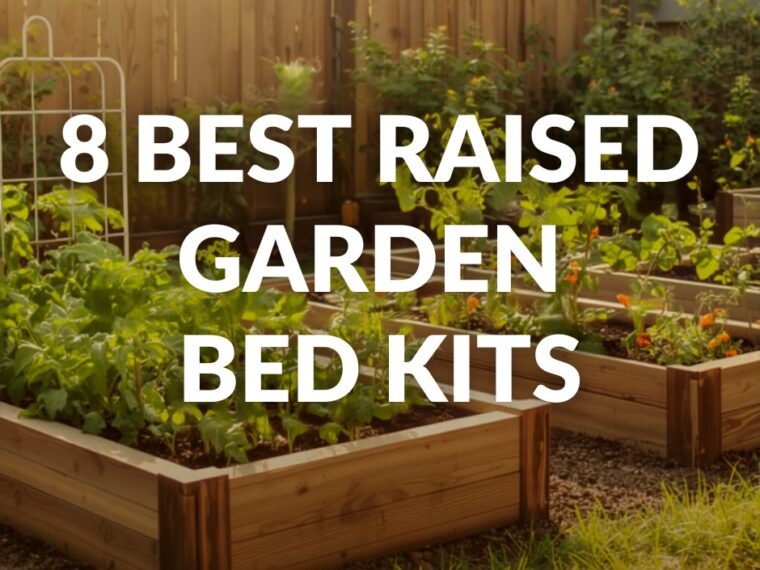
Brezid is reader-supported. When you buy through links on our site, we may earn a commission. As an Amazon Associate I earn from qualifying purchases.
There’s something about a raised garden bed that just makes gardening easier. Better drainage, fewer weeds creeping in from the surrounding lawn, less bending over, and soil you actually control from day one. But “raised bed kit” covers everything from a $40 sheet-metal rectangle to a $600 cedar system, and the differences matter more than the marketing suggests.
This guide walks through the main kit types, names the brands that keep coming up as reliable, and — just as usefully — tells you where each one falls short.
How We Assessed These
These recommendations are based on published specifications, manufacturer materials and aggregated owner reviews rather than our own long-term field testing. We say so because it matters: we can tell you a bed is 17 inches deep and made from Aluzinc-coated steel, but we haven’t personally watched it survive ten winters. Where owner reports consistently flag a weakness, we’ve included it.
Why Choose a Kit Over Building Your Own
- No measuring or cutting — everything arrives pre-sized
- Tested proportions — depth, height and bracing are already worked out
- Fast setup — most kits assemble in under an hour
- Better rot resistance — cedar, coated steel and composite outlast the untreated pine most people buy
Kits do cost more per square foot than lumber. If your budget is tight and you own basic tools, our guide to budget DIY raised beds from easy-to-find materials covers the cheaper route.
1. Galvanized Steel — the current default
Look at: Vego Garden · Olle Gardens · Land Guard
Corrugated metal beds have taken over the market in the last few years, and mostly deserve it. They’re light to move, don’t rot, assemble with a screwdriver, and the tall versions solve the bending problem outright. Vego Garden is the most established name here — Aluzinc-coated steel, modular panels, and a range that includes 17-inch and 32-inch heights.
The catch: panel edges can be sharp during assembly (wear cut-resistant gloves — this comes up constantly in owner reviews), and metal heats up faster than wood in direct sun, which matters in hot climates. Deep beds mitigate this; shallow ones in full southern sun don’t.
Best for: most people, most gardens.
2. Cedar — the traditional choice
Look at: Greenes Fence · Gardener’s Supply Company
Cedar is naturally rot- and insect-resistant without chemical treatment, which is why it remains the default for anyone growing food and worrying about what leaches into soil. Greenes Fence makes the widely available dovetailed cedar kits that slot together with no tools; Gardener’s Supply sits at the premium end with thicker stock and corner joinery that holds square for longer.
The catch: cedar still greys and eventually softens — expect 7 to 12 years depending on climate, less if it sits on wet ground. Thin-walled budget cedar kits warp within a couple of seasons.
3. Modular and Expandable
Look at: Frame It All · Vego’s modular range
Bracket-and-board systems let you start with one bed and extend it later, or stack for extra depth. Frame It All uses recycled composite boards in a socket system that also makes curved and tiered layouts possible.
The catch: you pay a premium for the flexibility, and you’re locked into that manufacturer’s parts for future expansion.
4. Tall and No-Bend Beds
Look at: Tall metal beds (32-inch) · Keter elevated resin
Anything from 24 inches up removes most kneeling. Genuinely transformative for gardeners with back or knee problems, and the only realistic option on a deck or balcony.
Two things people underestimate: the soil volume needed (a tall bed can swallow well over a cubic yard — fill the bottom third with logs or coarse material rather than buying compost for depth you’ll never plant into), and that elevated beds on legs, unlike tall ground beds, are usually only 8–12 inches deep and drain fast, so they need watering far more often.
5. Composite and Recycled Plastic
Won’t rot, splinter or attract termites, and holds up well in genuinely wet climates where wood breaks down fast. Higher upfront cost, but often cheaper across fifteen years.
The catch: cheaper resin can become brittle under sustained UV. Look for a UV-stabilisation claim and a multi-year warranty.
6. Large-Capacity Beds
If you want to grow a meaningful share of your own food, look for 4×8 feet or larger at 18+ inches deep — enough for tomatoes, carrots and potatoes.
Critical detail most guides skip: never go wider than 4 feet. You need to reach the middle from both sides without stepping in and compacting the soil. A 5-foot bed looks more generous and is a permanent nuisance.
7. Beds With Built-In Trellis
Worth it if you’re growing climbers — cucumbers, pole beans, peas. Vertical growing roughly doubles what a small bed produces. Vego and Frame It All both sell arch trellis kits that fit their beds. If cucumbers are the plan, our guide to growing cucumbers at home covers trellis spacing.
8. Beds With Hoop or Cover Options
Some kits accept hoop covers, turning the bed into a cold frame or low tunnel and adding weeks at both ends of the season.
If season extension is the real goal, price this against a small greenhouse first — see what a home greenhouse costs.
What to Check Before You Buy
- Depth: 12 inches minimum for salad and herbs, 18+ for root crops and tomatoes
- Width: 4 feet maximum, always
- Steel coating: Aluzinc or equivalent, not bare galvanised — coating determines whether it lasts five years or twenty
- Warranty: quality cedar and composite kits carry multi-year rot warranties. No warranty tells you something.
- Soil volume: calculate it before ordering. Filling a large bed frequently costs more than the bed did.
- Drainage: open-bottomed beds on soil drain naturally; anything with a base needs holes.
Don’t Forget the Soil
This is where first-time buyers get caught. A 4×8 bed at 17 inches deep needs roughly 1.5 cubic yards of fill — which will usually cost more than the kit. Buying bagged raised bed soil mix is convenient for small beds and expensive for large ones; bulk delivery from a local landscape supplier is far cheaper past about half a cubic yard. Line the bottom with landscape fabric if you’re placing over grass or gravel.
Which One Should You Actually Buy?
For most people: a 17-inch galvanized steel bed, 4 feet wide. It’s the best balance of cost, lifespan and effort, and it’s why these have taken over.
Choose cedar instead if the look matters more than longevity. Choose tall if bending is the problem you’re solving. Choose modular if you genuinely don’t know how far this is going to go.
And start with one. Nearly everyone who buys three beds in year one is watering two of them out of guilt by August.
Product availability and specifications change frequently — check current details on the manufacturer’s own site before buying.