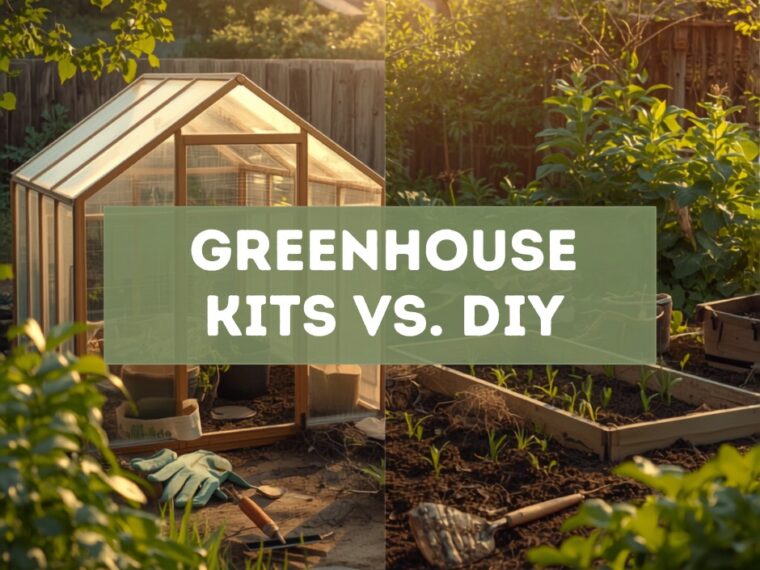
So you’ve decided you want a greenhouse. Congratulations — you’re about to join the ranks of gardeners who get to start seeds in February, baby tender plants through a late frost, and grow tomatoes that actually ripen before the squirrels find them. But before you get too far into seed catalogs, there’s one big decision to make: do you buy a greenhouse kit, or build one yourself from scratch?
Both routes get you to the same destination, but the journey — and the price tag — can look very different. Let’s walk through the real trade-offs so you can pick the option that actually fits your yard, your budget, and your weekend availability.
What You Get With a Greenhouse Kit
Greenhouse kits are exactly what they sound like: a pre-engineered package that includes the frame, panels, hardware, and (usually) an instruction manual. You order it, it arrives on a pallet or in several boxes, and you assemble it on-site.
Here’s why so many home gardeners start here:
- Predictable cost. You know the price upfront, with no surprise trips to the hardware store for one more bag of screws.
- Faster setup. Most kits can be assembled in a weekend or two, especially with an extra set of hands.
- Engineered for wind and snow loads. Reputable manufacturers design their frames to meet certain load ratings, so you’re not guessing at structural integrity.
- Warranty coverage. If a panel cracks or a frame piece is defective, you often have recourse with the manufacturer.
The trade-off is flexibility. Kits come in fixed sizes and shapes, and if your yard has an odd footprint or a slope, you may be fighting the design instead of working with it.
What You Get With a DIY Build
Building your own greenhouse from lumber, PVC, or repurposed materials is the choice for gardeners who want total control — over size, shape, materials, and cost.
A few reasons people go this route:
- Custom dimensions. You can design around an oddly shaped bed, a slope, or an existing structure like a shed wall.
- Material choice. Want reclaimed windows instead of polycarbonate panels? Go for it. DIY builds are a great way to repurpose materials you already have.
- Potential savings. If you’re resourceful and already have tools, a DIY build can cost significantly less than a comparable kit — especially for larger structures.
- Full creative control. Want a Dutch-style greenhouse with a steep roof pitch for snow shedding? You’re the architect.
The catch is time and skill. A DIY build requires planning (foundation, framing, glazing, ventilation), tools you may need to buy or borrow, and a much bigger time investment. Mistakes in framing or sealing can lead to leaks, poor insulation, or structural issues down the road.
Comparing the Real Costs
It’s tempting to assume DIY is always cheaper, but that’s not guaranteed. Here’s how the math tends to shake out:
- Small kits (6×8 ft): Often the most budget-friendly starting point, and usually cheaper than sourcing materials individually at that scale.
- Mid-size kits (8×12 ft and up): This is where DIY can start to pull ahead in savings, assuming you already own basic tools.
- Large or custom structures: DIY tends to win on cost per square foot, but the labor investment climbs steeply too.
Don’t forget to factor in your own time. If a DIY build takes three weekends versus one weekend for a kit, that’s worth something — especially during peak planting season when you’d rather be growing than building.
Which One Fits Your Situation?
A kit is probably your best bet if:
- You want something up and growing in it within a few weeks
- You’d rather not deal with permits, foundation work, or structural calculations
- Your yard has a fairly standard rectangular space available
- You value a warranty and predictable performance
A DIY build makes more sense if:
- You have carpentry or building experience (or are excited to learn)
- Your space is irregular or you want a specific size not sold as a kit
- You’re working with a tighter budget and have time to spread the project out
- You enjoy the process as much as the end result
A Few Things to Check Either Way
Regardless of which path you choose, don’t skip these basics:
- Sun exposure: Aim for a spot with at least 6 hours of direct sunlight, ideally with the long side facing south.
- Drainage: Avoid low spots where water pools after rain — that moisture will find its way inside.
- Ventilation: Whether it’s roof vents, louvered windows, or just propping the door open, airflow prevents overheating and disease.
- Local rules: Some municipalities require permits for permanent structures over a certain size, so it’s worth a quick check before you break ground.
The Bottom Line
There’s no universally “right” answer in the greenhouse kits vs DIY debate — it really comes down to how much time you have, how handy you are, and how particular you are about size and shape. If you want to be growing seedlings by next month, a kit gets you there fastest. If you’re the type who enjoys a good weekend project and wants a greenhouse built exactly to your specs, DIY might be the more satisfying — and eventually cheaper — route.
Whichever you choose, the payoff is the same: a few more months of growing season, healthier seedlings, and a cozy spot to escape to when the weather outside isn’t cooperating. Happy building — and happier growing.