Here’s a number that surprises most homeowners: clogged gutters are behind a huge share of preventable water damage claims, and the average foundation or basement repair that follows runs into the thousands. Meanwhile, the thing that causes it all — a gutter full of wet leaves — costs about $120 to $250 to clean out a couple of times a year. So when a salesperson quotes you $2,000 or more for gutter guards and promises you’ll “never clean your gutters again,” it’s fair to wonder: are gutter guards worth it, or are you just prepaying for a decade of cleanings up front?
The honest answer is: it depends on your trees, your roof, and which type of guard you buy. Some homes genuinely save money and hassle with guards. Others would be better off keeping a cleaning service on speed dial. Let’s walk through it so you can figure out which home is yours.
What Gutter Guards Actually Do (and Don’t Do)
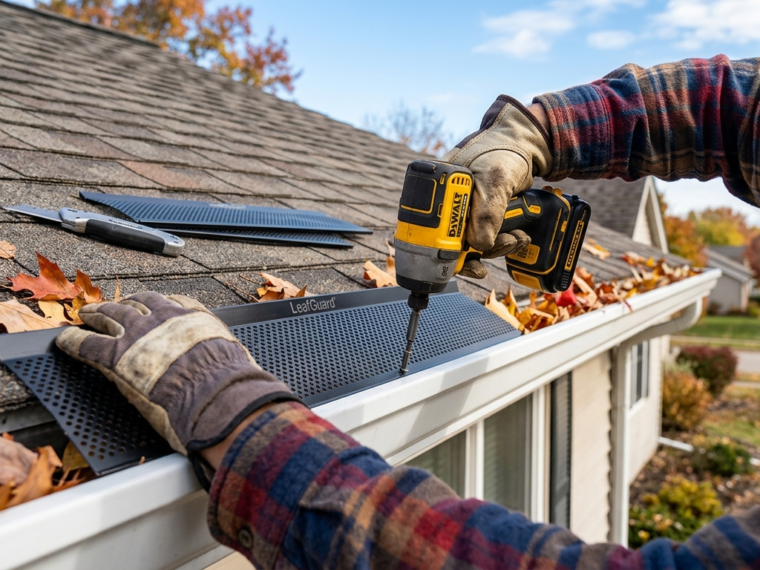
Gutter guards are covers, screens, or inserts that sit over or inside your gutters to keep debris out while letting rainwater flow through. The idea is simple: leaves stay on top and blow away, water passes into the gutter and down the spout.
What they do well:
- Keep out large debris — leaves, twigs, and most seed pods
- Reduce cleaning frequency dramatically (not to zero — more on that below)
- Discourage birds, squirrels, and wasps from nesting in your gutters
- Help gutters drain properly during heavy rain, protecting fascia, siding, and foundation
What no guard does, despite the marketing: eliminate maintenance entirely. Pollen, shingle grit, pine needles, and seed fluff still find their way in or build up on top. Even the best systems need an inspection and a light cleaning every year or two. Any company that promises “never touch your gutters again” is overselling.
The Main Types of Gutter Guards, From Cheapest to Priciest
Foam inserts ($2–$3 per foot, DIY): Wedge-shaped foam that sits inside the gutter. Cheap and easy, but they break down in a few years and can actually trap seeds that sprout right in your gutter. Best as a short-term fix.
Brush guards ($3–$4 per foot, DIY): Giant pipe-cleaner-style brushes laid in the gutter. Easy to install and remove, but debris tangles in the bristles, so “cleaning the gutter” becomes “cleaning the brush.”
Screen guards ($1.50–$3.50 per foot, DIY-friendly): Plastic or metal mesh panels that snap over the gutter. A solid budget option for homes with mostly large-leaf trees. Lighter screens can blow off in storms and may dent under snow.
Micro-mesh guards ($8–$25 per foot installed): Fine stainless-steel mesh on a rigid frame. These block nearly everything, including pine needles and shingle grit, and consistently come out on top in independent testing. Professional installation is typical, which is where much of the cost lives.
Reverse-curve / surface-tension systems ($15–$35 per foot installed): The heavily advertised brands. Water wraps around a curved hood into the gutter while debris slides off. They work, but they’re the priciest option, often require replacing your existing gutters, and can overshoot in very heavy downpours.
The Real Math: Gutter Guards vs. Paying for Cleanings
For a typical home with about 200 feet of gutters, here’s how the numbers shake out:
- Professional cleaning: $120–$250 per visit. Two visits a year = roughly $250–$500 annually, or $2,500–$5,000 over ten years.
- DIY screen guards: $300–$700 in materials plus a weekend of your time. Even if they only cut cleanings in half, they pay for themselves in a year or two.
- Professionally installed micro-mesh: $1,600–$5,000 depending on your home’s size and roof height. Break-even against professional cleanings usually lands around year four to eight.
- Premium reverse-curve systems: $3,000–$7,000+. These may never fully pay for themselves in avoided cleanings alone — you’re also buying convenience and reduced ladder risk.
That last point deserves more weight than it usually gets. Falls from ladders send thousands of people to emergency rooms every year, and gutter cleaning is a classic culprit. If you’re the one climbing up there twice a year, a good guard system isn’t just a money decision — it’s a “staying off a 20-foot ladder in your sixties” decision.
Real talk for a second: my neighbor spent two autumns grumbling about the quote he got for micro-mesh guards, kept cleaning his own gutters to save money, and then spent a rainy November week watching water stain his basement wall because one clogged downspout sent runoff straight down the foundation. The repair cost more than the guards would have. Sometimes the expensive option is the cheap one wearing a disguise.
When Gutter Guards Are Worth It
Guards make the most sense if any of these sound like your house:
- Heavy tree cover — especially oaks, maples, or pines that drop debris across multiple seasons
- A two-story home or steep roof — where every cleaning means a tall ladder or a pro visit
- Gutters that clog more than twice a year — you’re already past the point where guards pay off
- A history of ice dams — clean, free-flowing gutters won’t cure ice dams, but clogged ones make them worse
- You plan to stay in the home 5+ years — long enough to reach break-even on a quality system
When You Can Skip Them
On the other hand, save your money if your house has few or no overhanging trees, a single-story roofline you can safely reach, or you’re planning to sell within a couple of years. In those cases, a $150 cleaning once or twice a year is the smarter spend. And if your gutters are old, sagging, or pulling away from the fascia, fix or replace the gutters first — guards mounted on failing gutters are money wasted.
The Bottom Line
So, are gutter guards worth it? For homes with real tree coverage and hard-to-reach gutters, yes — a professionally installed micro-mesh system typically pays for itself within several years and takes ladder falls off the table. For low-debris, easy-access homes, routine cleaning wins on cost.
One tip worth remembering above all: get at least three quotes, and make sure one of them is from a local gutter company rather than only the big national brands. Local installers often fit the same quality micro-mesh for a third of the heavily advertised price — and that single phone call can save you more than every other decision in this article combined.