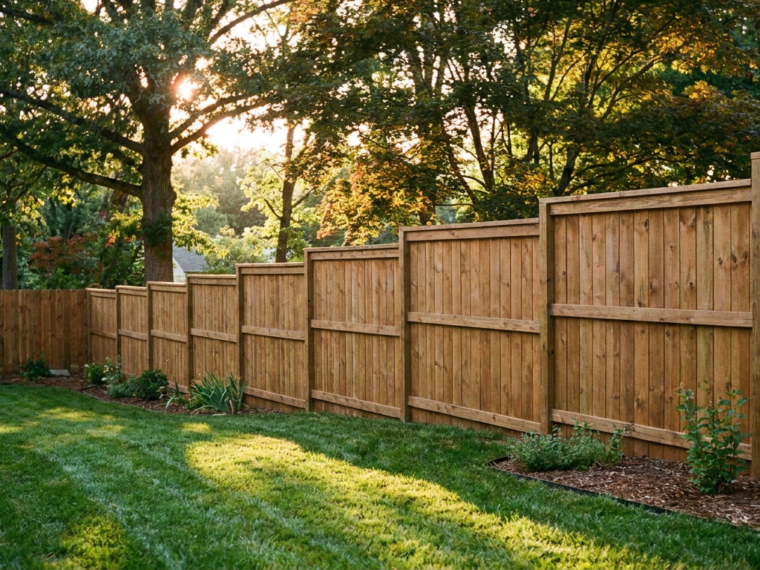
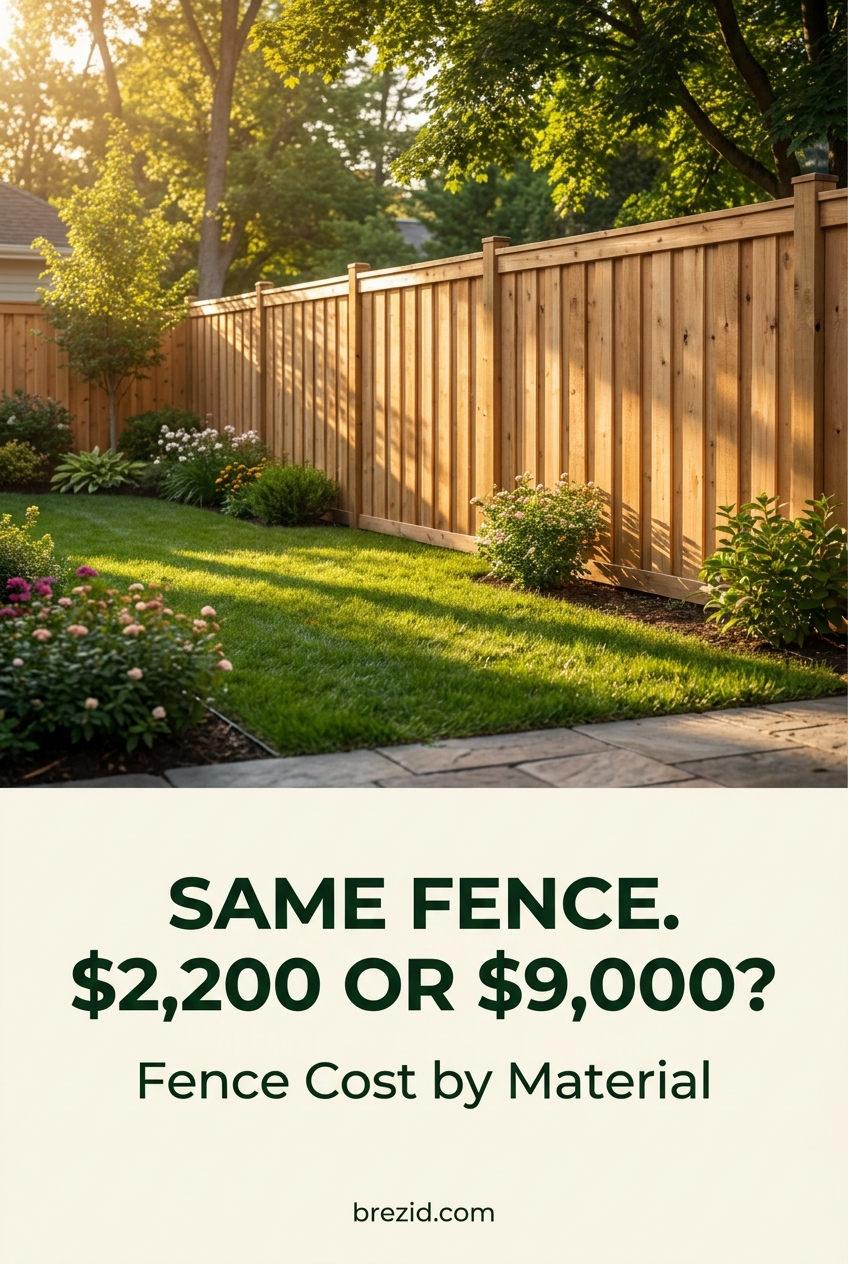
Get three quotes for the exact same 150-foot backyard fence and you can easily see numbers ranging from $2,200 to $9,000. Same yard, same linear footage, wildly different bills. The gap isn’t contractors padding their margins — it’s almost entirely explained by one choice most homeowners make before they even call anyone: the material.
Fence installation cost is one of those home projects where the sticker price everyone quotes (“fencing runs $20 to $50 a foot”) is technically true and almost useless, because that range hides three completely different projects. Here’s what actually drives the number, material by material, so you can budget accurately before a single contractor shows up.
What Fencing Actually Costs, Material by Material
Most fence quotes are priced per linear foot, and installed cost (materials plus labor) typically breaks down like this:
- Chain link: $8–$20 per foot — the budget option, fast to install, minimal privacy
- Pressure-treated wood: $15–$35 per foot — the most common residential choice, good privacy, needs upkeep
- Vinyl: $20–$45 per foot — low maintenance, holds its look for decades, higher upfront cost
- Aluminum or steel (ornamental): $25–$50 per foot — decorative, durable, usually not for privacy
- Composite: $30–$60 per foot — wood look without the maintenance, the priciest common option
For a typical 150-foot backyard perimeter, that spread alone puts you anywhere from $1,200 (chain link) to $9,000 (composite) before you’ve factored in anything about your specific yard. If you’re weighing looks and privacy alongside price, our guide to fencing options for privacy and curb appeal compares the styles side by side.
The Line Item Nobody Budgets For: Your Yard’s Terrain
Here’s the part that catches people off guard. The material only sets your baseline — your actual yard adds or subtracts a real chunk of money on top of it.
- Slope: Fencing on a sloped lot needs stepped or racked panels, which adds 10–20% to labor — the same terrain that drives up retaining wall cost
- Ground type: Rocky or clay-heavy soil means post holes take longer to dig, sometimes requiring an auger rental or a hand-dug approach that adds hours per post
- Removal: Tearing out an old fence before the new one goes up typically adds $3–$10 per foot
- Gates: Each gate (walk-through or driveway) adds $150–$800 depending on size and hardware
- Permits and surveys: Many municipalities require a permit for fences over a certain height, and if your property lines aren’t clearly marked, a survey ($400–$700) can save you from a very expensive dispute with a neighbor later
Real talk: I’ve watched a homeowner get a beautiful vinyl fence quote, sign off on it, and then get hit with an extra $1,800 change order once the crew discovered the old chain link had to come out first and two gates weren’t in the original walkthrough. Nothing shady happened — it just wasn’t asked about upfront. Always ask your quote explicitly: “does this include removal of the existing fence, and how many gates?”
DIY vs. Hiring a Pro
Fencing is one of the more DIY-friendly outdoor projects, but the savings depend heavily on material and yard size:
- Chain link and basic wood: Very doable for a weekend warrior with a post-hole digger or auger rental — DIY can cut costs by 40–60%, mostly by saving on labor
- Vinyl and composite: Panels need to be perfectly level and plumb or they look off and can warp over time — many manufacturers also void warranties on DIY installs
- Ornamental steel or aluminum: Heavier materials and precise post spacing make this one of the harder DIY fence types to get right
A good rule of thumb: if you’re comfortable renting and running a two-person auger for a weekend, wood or chain link DIY can save real money. Past that, the time and risk of a crooked, sagging fence usually make hiring a pro worth the premium.
How to Get an Accurate Quote (Not Just a Cheap One)
When you’re comparing bids, make sure every contractor is quoting the same scope:
- Confirm linear footage together — don’t rely on your own tape measure estimate
- Ask if old fence removal and disposal is included
- Get the exact post spacing and depth specified (shortcuts here cause the fence to lean within a few years)
- Count gates and hardware separately — they’re a common place quotes diverge
- Ask who pulls the permit, if one’s required in your area
These rules apply to any outdoor contractor, not just fencing — our landscaping cost guide covers how to read an itemized quote and what a fair deposit schedule looks like.
The Bottom Line
For most homeowners, a mid-range choice like pressure-treated wood hits the sweet spot: real privacy, a manageable price per foot, and a fence that lasts 15-20 years with basic upkeep. If low maintenance matters more to you than upfront cost, vinyl earns back its premium in the years you won’t spend staining or repairing boards. It’s also worth remembering that a new fence is one of the curb appeal upgrades that add the most home value, so some of that spend comes back at resale.
Whatever material you land on, get at least three quotes and make sure each one spells out removal, gates, and post depth in writing — that’s where the “surprise” costs almost always hide, and it’s the single easiest way to make sure the number you agree to is the number you actually pay.