The average water heater fails without warning — not with a dramatic burst, but with a quiet drop from “hot” to “lukewarm” over a few days, until one morning you’re standing in a cold shower wondering how long it’s actually been dying. Most homeowners don’t think about water heater replacement cost until they’re already in that moment, calling around for quotes while the basement floor is wet. Knowing the real numbers ahead of time turns a panic decision into a planned one.
How Much Does a Water Heater Replacement Actually Cost?
Water heater replacement cost varies more than most home projects, mostly because “water heater” covers a few very different types of equipment:
- Standard tank, electric (30–50 gallon): $900–$1,800 installed
- Standard tank, gas (30–50 gallon): $1,100–$2,200 installed
- Tankless, electric: $1,800–$3,500 installed
- Tankless, gas: $3,000–$5,500 installed, more if venting needs rerouting
- Heat pump water heater: $2,500–$4,500 installed, though rebates can cut this significantly
The unit itself is usually the smaller part of the bill. Labor, permits, and any modifications to plumbing, gas lines, or venting typically make up 30–50% of the total.
What Drives the Price Up (or Down)
Two houses with the “same” water heater swap can end up with wildly different invoices. The gap usually comes down to a handful of factors:
- Switching fuel types — going from electric to gas (or the reverse) means new lines, and that’s often the single biggest cost add-on
- Tank to tankless conversions — tankless units need larger gas lines and different venting, which can add $500–$1,500 on its own
- Permits and code updates — older installs are often grandfathered out of code; a replacement can trigger a requirement to bring the whole setup up to current standards
- Access and location — a unit tucked in a tight attic or crawlspace costs more in labor than one sitting in an open garage
- Capacity increase — going from a 40-gallon to a 50-gallon tank to keep up with a growing household adds cost, but usually less than people expect
Tank vs. Tankless: Which Is the Better Investment?
This is the question that stalls most people, and the honest answer is: it depends on how long you’re staying and how you use hot water.
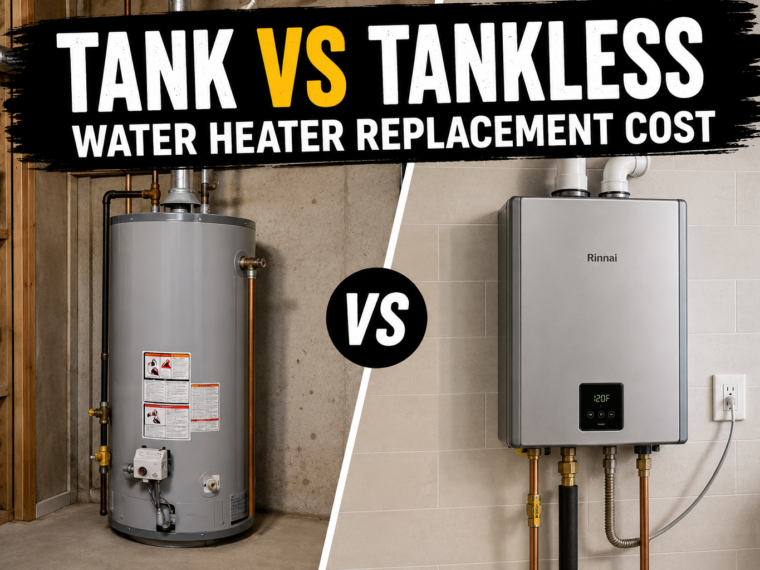
A standard tank costs less upfront and is simple to install, but lasts 8–12 years and constantly reheats water even when nobody’s using it. A tankless unit costs more to install — sometimes two to three times as much — but lasts 15–20 years, heats water only on demand, and typically cuts water heating costs by 24–34% for a household using around 41 gallons or less per day.
The break-even point usually lands somewhere between years 7 and 10. If you’re planning to sell within the next five years, a standard tank is the more practical call. If this is a forever home, tankless tends to pay for itself.
Signs You Need a Replacement Now (Not Later)
Water heaters rarely give you much notice, but there are tells if you know to look for them:
- The unit is 8–12+ years old (check the manufacture date on the label near the top)
- Water coming out rusty or discolored, especially from the hot tap only
- Rumbling, popping, or banging noises from sediment buildup inside the tank
- Any moisture or pooling water around the base
- Inconsistent temperatures or a noticeably shorter hot water supply than it used to have
Real talk: A neighbor of mine put off replacing his water heater for almost a year after it started making noise, mostly because he couldn’t decide between tank and tankless and didn’t want to make the “wrong” call. It finally failed on a Friday night, and he ended up paying an emergency after-hours rate for whatever the plumber had on the truck — not the unit he actually wanted. If yours is already showing signs, get the quotes now, on your schedule, while you still have the luxury of comparing options.
DIY vs. Hiring a Pro
This is one project where the line between DIY and professional work matters more than usual. Gas line connections, venting, and electrical work on a 240-volt circuit aren’t places to save money by winging it — a mistake can mean a gas leak or carbon monoxide risk, not just a leaky pipe. Most local codes actually require a licensed plumber for gas water heater installs, and many home insurance policies won’t cover damage from an unlicensed DIY install gone wrong.
Where DIY makes sense: replacing a like-for-like electric tank in an easily accessible spot, if you’re comfortable with basic plumbing and local code allows it. Everywhere else, the labor cost buys real protection.
How to Get the Best Price
- Get three quotes minimum — pricing on this project varies by hundreds of dollars between contractors for identical work
- Ask about rebates — many utility companies and some state programs offer $300–$800+ rebates for high-efficiency or heat pump water heaters
- Avoid emergency timing when you can — scheduling a replacement before full failure, rather than after, typically saves 15–25% by skipping after-hours and rush fees
- Check the warranty terms — longer-warranty tanks usually have thicker tank linings and last measurably longer, which matters more than the sticker price difference
The single most useful thing you can do today: find your water heater’s age (it’s usually a serial number decoded on a sticker near the top of the unit) and check it against the 8–12 year mark. If it’s close, start collecting quotes now — not because you need to replace it this week, but because a planned water heater replacement cost is always lower than an emergency one.