You wiped down the living room on Saturday. By Wednesday, you run a finger along the shelf and there it is again — that soft gray film, like nobody had cleaned in a month.
It isn’t your imagination, and it isn’t that you’re suddenly cleaning worse. Indoor dust really does build up faster once the weather turns, and the reason your house gets dustier in fall has almost nothing to do with how often you pick up a cloth. It has to do with three things changing at the same time: your windows close, your heating system wakes up, and your house fills with fabric that spent all summer folded in a closet.
Here’s what’s actually happening, and what’s worth doing about it.
Why fall dust seems to appear overnight
Three ordinary seasonal changes stack on top of each other in September and October:
- The air stops moving out. All summer, open windows and screen doors carried a constant amount of airborne particles outside. Close everything up and that same dust stays in circulation, settling and re-settling on the same surfaces instead of drifting out.
- The air gets drier. Cooler outdoor air holds less moisture, and heating it drops indoor humidity further. Dry air means more static — lint and fiber cling to surfaces and stay airborne longer instead of clumping and dropping.
- The light changes. This one’s half perception, but it’s real. The autumn sun sits lower and rakes across your furniture at a shallow angle in the late afternoon, lighting up a film that honestly may have been there in July too. You’re not seeing more dust — you’re seeing it better.
That last point matters, because it means part of the fix is about where dust lands, not just how much of it exists.
Source 1: Your heating system’s first three weeks
This is the big one, and it’s the one almost nobody connects to the shelf they just wiped.
Your ducts and vents sat still for months. Fine dust settled inside them, along the blower housing, and on the registers. The first time the furnace kicks on for a real heating cycle, all of that gets pushed back into your rooms at once. If you’ve ever noticed a faint burnt-dust smell on the first cold night, that’s the same phenomenon — the dust that was sitting on the heat exchanger.
What helps:
- Change the furnace filter before the first real cold snap, not after. A filter that’s been in since spring is already loaded.
- Change it again about 30 days later. This is the trick most people skip. That second filter catches the wave of redistributed dust the first heating cycles kick loose, and it makes a visible difference by November.
- Vacuum the vent covers and the floor registers — including the few inches you can reach inside. Pet hair and lint collect right at the grille.
- Run the fan on “circulate” for a while after you put in a fresh filter, so air keeps passing through the new media instead of only during heat cycles.
Source 2: The fall fabric swap
Textiles are the single largest contributor to ordinary household dust. Not construction debris, not outdoor soil — fibers. Cotton, wool, flannel, upholstery, carpet.
And what happens in September? You pull the flannel sheets out of the cedar chest. The wool throw comes off the shelf. The heavy rug goes back down in the entryway. The sweaters come out of the bin under the bed. Every one of those items has been compressed and folded for months, and every one of them sheds like crazy for the first few weeks it’s back in use.
Real talk: I used to blame the open window for my bedroom dust, until the year I actually washed the winter blankets before putting them on the bed instead of just shaking them out on the porch. The difference on the nightstand was obvious within a week. Now the seasonal blanket wash is the first thing I do, not the thing I mean to get around to.
So: wash or at least tumble anything coming out of storage before it goes into service. A 15-minute no-heat tumble with a couple of dryer balls pulls out a startling amount of loose fiber, and it all ends up in the lint trap instead of on your furniture.
Source 3: What comes in on shoes and paws
Fall soil is dry and crumbly, leaf litter breaks down into fine powder, and all of it rides in on shoe treads to get ground into the entry rug. Meanwhile, pets are actively changing coat for winter — dogs and cats both shed heavily in autumn, and that dander is light enough to stay airborne for hours.
Two things carry most of the weight here:
- A real doormat system — a coarse scraper mat outside, an absorbent mat inside. One mat does about half the job of two.
- A shoes-off habit at the door. It’s the single highest-impact change on this entire list and it costs nothing.
- Brushing the dog outside during the autumn coat change, rather than letting the house do the collecting.
What actually reduces fall dust, in order of payoff
- Fresh furnace filter now, second one in 30 days. Biggest single lever.
- Shoes off at the door and a two-mat entry.
- Wash everything coming out of storage before it goes on a bed or a floor.
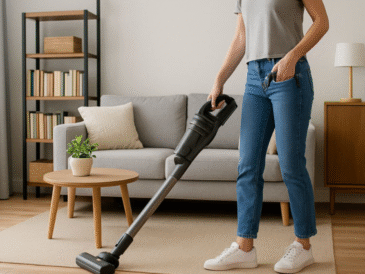
- Vacuum with a sealed HEPA machine, slowly. Speed is the enemy — two slow passes beat six fast ones, and a leaky vacuum just relocates fine dust into the air.
- Damp microfiber, never a feather duster. A dry duster mostly launches dust upward to land again a few feet away. A slightly damp cloth captures it.
- Keep indoor humidity around 40–50%. Dust settles faster and clings less in air that isn’t bone dry.
- Clear the horizontal surfaces. Every knickknack is a dust shelf. Fewer objects, less visible film — and far less time spent lifting and wiping.
The cleaning order most people get backwards
If you vacuum first and dust second, you’ve just resettled everything you vacuumed up. Do it in this order and the same effort lasts noticeably longer:
- Dust high to low — light fixtures, shelf tops, then furniture, then baseboards.
- Wait about 20 minutes for anything airborne to settle.
- Then vacuum, slowly, finishing with the entry rug.
The standout tip, if you only take one thing from all of this: put a calendar reminder for a second furnace filter change 30 days after the first one. It’s the cheapest, fastest fix for why your house gets dustier in fall, it takes two minutes, and it’s the one step that catches the dust your heating system spends October throwing back into the room. Do that this week, wash the blankets before they hit the bed, and by the time the holidays arrive you’ll be wiping that shelf half as often.