Here’s a number that surprises most homeowners: professional pressure washing for an average house exterior typically runs somewhere between $200 and $450 — yet renting a machine for a weekend costs about $50 to $100. So why do millions of people happily pay the pros every year? Because the price gap hides a few things that only become obvious once you’ve stood in your driveway holding a wand that’s peeling paint off your siding. Let’s break down real pressure washing cost, what drives the price up or down, and — just as important — when doing it yourself is completely fine.
What Pressure Washing Costs, Job by Job
Pros usually price by the square foot or by the job. Here’s the range you’ll see quoted across most of the US:
- Driveway: $100–$250 depending on size and how stained it is. Oil spots and years of tire marks push you to the top of the range.
- House siding (full exterior): $200–$450 for a single-story home; $400–$700+ for two stories. Vinyl is cheapest to clean, brick and stucco cost more because they need lower pressure and more care.
- Deck or patio: $120–$250. Wood decks often cost more than concrete patios because they require a gentler touch.
- Roof: $250–$600. This is almost always a soft-wash job (low pressure plus cleaning solution) — high pressure can destroy shingles.
- Fence: $150–$300 for a typical backyard run of wood fencing.
- Gutters (exterior faces): $50–$150 as an add-on to another job.
Per-square-foot pricing generally lands between $0.15 and $0.75. The low end is flat, open concrete; the high end is delicate surfaces, two-story ladder work, or heavy staining.
What Actually Drives the Price
Two identical-looking quotes can be $150 apart, and it usually comes down to a handful of factors:
- Surface material. Concrete tolerates high pressure and goes fast. Wood, stucco, and roofing need soft washing, which means more time, special detergents, and more skill.
- Height. Anything above the first story means ladders, extension wands, or scaffolding — and higher labor cost.
- How dirty it is. A yearly maintenance wash is quick. A driveway that hasn’t been touched in a decade may need degreaser, pre-treatment, and two passes.
- Water access. Most pros use your outdoor spigot. If you don’t have one accessible, some companies bring water and charge for it.
- Your region. Prices in big metro areas run 20–40% above small-town rates, same as most home services.
One honest tip when comparing quotes: ask whether the price includes pre-treatment and post-rinse of nearby plants. The cheapest quote sometimes skips the steps that protect your landscaping and get the deep stains out. Our landscaping cost guide covers how to compare itemized outdoor quotes properly.
The DIY Option: What It Really Costs
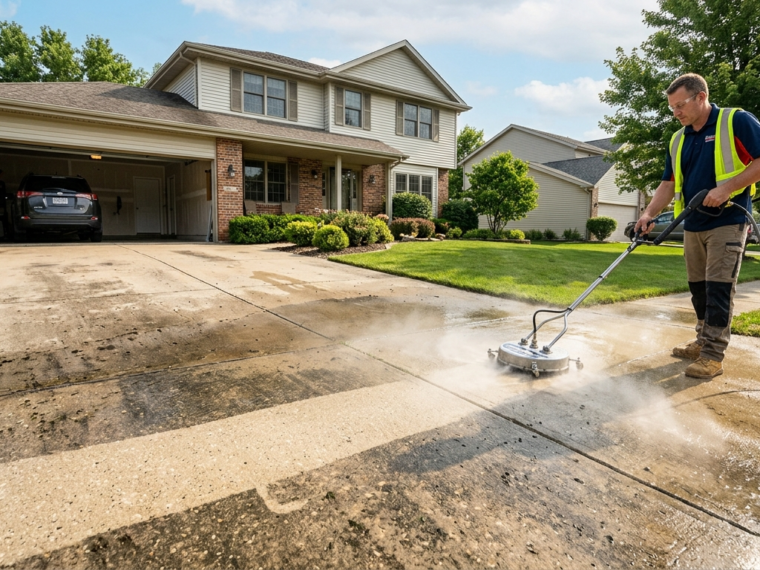
Renting a gas pressure washer runs $40–$100 per day, and a decent electric machine costs $100–$250 to buy outright. Add $15–$30 for detergent and maybe a surface cleaner attachment ($30–$60), which is the round spinning tool that makes driveway cleaning dramatically faster and streak-free.
So a DIY driveway wash might cost you $60 and a Saturday morning — versus $150–$200 for a pro. Over a few years of regular cleaning, owning a machine pays for itself easily.
Real talk from someone who learned this the slow way: the first time I pressure washed a concrete path, I skipped the surface cleaner attachment and just used the wand. It worked — but the path came out covered in visible arcing stripes, like someone had mowed the concrete in random directions. I ended up redoing the whole thing. If you’re cleaning any large flat surface, that $40 attachment is the difference between “looks professional” and “looks like a toddler did calligraphy.”
When DIY Is Completely Fine
You genuinely don’t need a pro for:
- Driveways, sidewalks, and concrete patios. Concrete is forgiving. Keep the nozzle moving, use a surface cleaner, and you’ll get pro-level results.
- Fences and single-story vinyl siding — if you use a wide-angle nozzle (25° or 40°) and keep your distance. Never use the red 0° nozzle on anything you care about.
- Outdoor furniture, garbage bins, grills. Quick, satisfying, low-risk.
When to Call a Pro Instead
Some jobs aren’t about effort — they’re about risk:
- Roofs. High pressure strips the granules off asphalt shingles and can void your roof warranty. Pros soft-wash roofs with specialized low-pressure equipment. This one is worth every dollar.
- Second-story siding. Holding a kicking pressure wand while standing on a ladder is how emergency rooms meet new people. Pros use extension systems from the ground.
- Old wood decks and painted surfaces. Too much pressure gouges soft wood and blasts paint into chips. If your deck is more than a few years old, a pro’s touch (or at minimum, a very careful low-pressure wash) protects your investment.
- Anything before painting or selling. If the wash is prep for a paint job or a home sale, a uniform professional result matters more than saving $150.
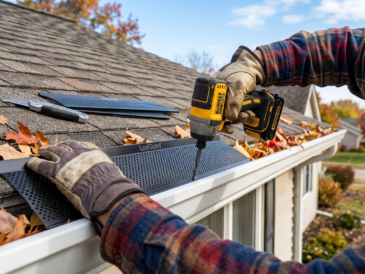
While you’re up there thinking about the roofline: if you’re paying someone to clean gutter faces every year, it’s worth working out whether gutter guards are worth it for your situation.
Is Pressure Washing Worth It for Home Value?
Short answer: it’s one of the highest-return, lowest-cost things you can do to a home’s exterior. Real estate agents consistently put exterior cleaning near the top of pre-listing to-do lists because a clean driveway and bright siding change a buyer’s first impression instantly — for a few hundred dollars, not a few thousand. It sits alongside the other curb appeal upgrades that add the most home value, and it’s the cheapest one on that list by a wide margin.
Even if you’re not selling, an annual wash prevents mold, algae, and grime from slowly eating into siding, paint, and sealant, which means you’re delaying much bigger repair bills. If your deck or patio is what needs the attention, our comparison of deck versus patio covers the maintenance burden each one carries long-term.
The Takeaway
Here’s the simple decision rule for pressure washing cost: flat concrete at ground level = DIY; anything tall, delicate, or attached to your roof = hire it out. If you do just one thing after reading this, walk outside and look at the north-facing side of your house — that’s the shady side where algae and green film show up first. If it’s turning green, schedule a wash (or rent a machine) this season. Catching it now is a $100 problem. Letting it sit for five years can turn it into a repainting problem — and that one starts at $3,000.