
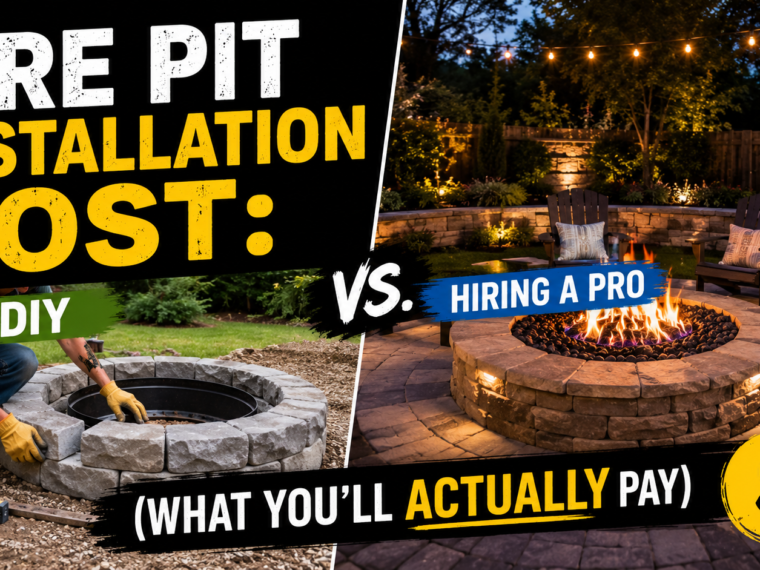
Here’s something that surprises a lot of homeowners: the fire pit itself is rarely the expensive part. A basic steel bowl runs $50 to $150. What actually drives the bill up — sometimes past $3,000 — is everything around it: the base, the gas line, the permit, and the labor to do it safely. If you’re weighing a weekend DIY project against calling a landscaper, here’s what you’ll actually pay for fire pit installation cost, and where the money really goes.
The Real Cost Range, Broken Down
Fire pit installation cost swings wildly depending on type, so it helps to separate the categories:
- Portable/pre-fab fire pit (wood-burning): $100–$400 for the unit, no installation needed beyond placing it on a fire-safe surface.
- DIY in-ground or built stone fire pit: $300–$900 in materials (pavers, fire brick, gravel base).
- Professionally built masonry fire pit (wood-burning): $1,500–$3,500 including labor, base prep, and finishing.
- Gas fire pit with a buried line: $2,500–$6,000+, because you’re now paying for trenching, a gas line run from your home’s supply, and often a licensed plumber to make the connection code-compliant.
That gas line is the single biggest cost jump in this whole list. A wood-burning pit is basically a hole with rocks around it. A gas pit is a small home improvement project with its own permit and inspection.
What Professional Installation Actually Adds
When a landscaping or hardscaping company quotes you $2,000+ for a fire pit, you’re not just paying for someone to stack stones. That price usually covers:
- Proper base excavation and compaction — skip this and your fire pit will heave and crack within a couple of winters, especially anywhere with freeze-thaw cycles.
- Fire-rated materials — regular landscape pavers can crack or even explode from trapped moisture when exposed to direct high heat; you need fire brick or heat-rated block for the interior ring.
- Gas line permitting and inspection (if applicable) — this is the part most DIYers legally cannot do themselves in many municipalities.
- Clearance planning — pros know the local setback rules for how far a fire pit needs to sit from your house, fence, and trees.
DIY Fire Pit: What It Actually Takes
If you’re handy and going the wood-burning route, a weekend DIY build is genuinely realistic. Here’s the rough process:
- Dig out a circle roughly 6 inches deep and slightly wider than your finished pit.
- Lay a compacted gravel base (this is the step people skip, and it’s the one that matters most).
- Line the interior with fire brick or heat-rated concrete block — not standard pavers.
- Stack your outer decorative wall (regular pavers or stone are fine here since they’re not in direct flame contact).
- Leave at least 10 feet of clearance from structures, fences, and overhanging branches.
Real talk: I’ve seen plenty of “DIY fire pit” projects online that are just regular retaining wall blocks stacked in a circle with no fire brick liner. They look great for one season, then the concrete starts spalling and flaking from heat stress. Spend the extra $80–$150 on real fire brick — it’s the cheapest insurance policy in the whole project.
Local Codes and Safety Considerations
Before you dig anything, it’s worth a quick call to your local building or fire department. Many cities and HOAs regulate:
- Minimum distance from structures and property lines
- Whether wood-burning fire pits are allowed at all (some drought-prone areas restrict or ban them seasonally)
- Permit requirements for gas line work — this one is rarely optional
Skipping this step doesn’t just risk a fine. It can also complicate a home sale down the road if an inspector flags an unpermitted gas modification.
So Which Should You Choose?
A simple wood-burning fire pit is one of the best DIY-to-savings ratios in outdoor living — you can build a solid, safe one for under $500 in a weekend if you don’t cut corners on the base and liner. A gas fire pit is where it makes sense to bring in a pro, mainly because the gas line work often isn’t legal or safe to DIY, not because the masonry is especially hard.
If you’re on the fence, here’s the standout tip: call two local hardscaping companies for a quote on a gas fire pit even if you plan to DIY a wood-burning one. Comparing the real numbers side by side makes the tradeoff — cost versus convenience versus the “flip a switch and it’s lit” factor of gas — a lot easier to weigh for your actual yard and budget.