In a world full of expensive cleaning sprays and fancy gadgets, some of the best solutions are still the simplest.
The vinegar-in-the-microwave trick is one of them. If you’ve ever struggled with crusted spaghetti sauce, lingering odours, or splatters that just won’t budge, this is genuinely worth two minutes of your time — and unlike a lot of viral cleaning advice, the chemistry behind it actually holds up.
Why It Works
White distilled vinegar contains acetic acid, a weak acid that:
- Helps break down grease and food residues
- Dissolves mineral and limescale buildup
- Neutralises many odours rather than masking them
But the real work here isn’t the acid — it’s the steam. Heating vinegar and water fills the cavity with hot vapour that condenses on every surface, softening dried-on food until it wipes away with almost no pressure. You’re not dissolving the mess so much as rehydrating it.
That’s why this method beats scrubbing: it does the loosening for you, in the corners and roof of the microwave where a sponge never properly reaches.
Step-by-Step: How to Clean Your Microwave with Vinegar
You’ll Need
- 1 cup white distilled vinegar
- 1 cup water
- 1 microwave-safe glass or ceramic bowl
- 1 soft cloth or sponge
- Optional: a wooden toothpick or chopstick (see the safety note below)
Instructions
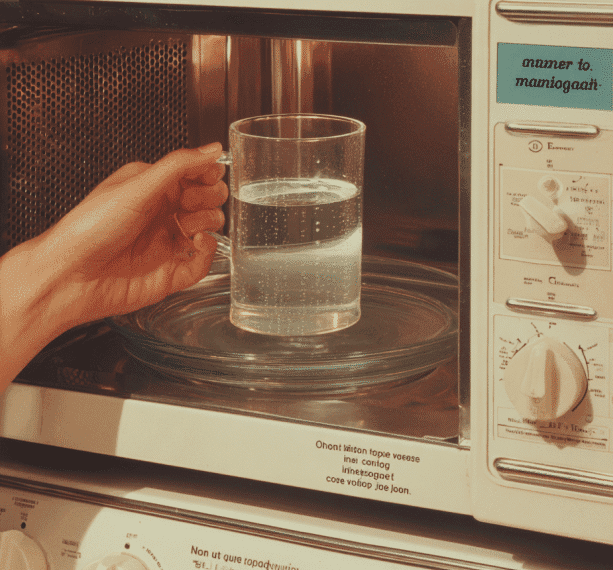
- Mix it up. Combine equal parts water and vinegar in your microwave-safe container. Don’t fill it more than halfway.
- Drop in a wooden toothpick. This prevents superheating — see the warning below. It takes a second and it matters.
- Heat it. Run on high for 3 to 5 minutes, until the liquid is boiling and the window has steamed up.
- Let it sit. Leave the door closed for 3 to 5 minutes. This is the part people skip, and it’s the part that does the work — the steam needs time to condense and soften everything.
- Wipe it down. Remove the bowl carefully with oven mitts. Wipe the roof first, then the sides, then the floor, then the turntable. Grime should lift with light pressure.
- Finish. Wipe the door seal with a plain damp cloth, then leave the door open a few minutes to dry out.
⚠️ One Real Safety Warning: Superheating
This is the part most versions of this tip leave out, and it’s the only genuinely dangerous thing about the method.
Water heated in a very smooth container can pass its boiling point without actually bubbling — it has no rough surface to form bubbles on. It looks calm. Then you move it, or drop a spoon in, and it flash-boils violently out of the container. People have been badly scalded this way.
Two simple precautions eliminate the risk: put a wooden toothpick, chopstick or coffee stirrer in the bowl before heating to give bubbles somewhere to form, and let it stand a couple of minutes before moving it. Do those and this is a completely safe job.
An Honest Note on “Vinegar Kills Bacteria”
You’ll see this trick sold as a natural disinfectant. We’d rather be accurate: vinegar is a cleaner, not a disinfectant.
Acetic acid does have some antimicrobial effect, but at household strength it’s weak and inconsistent, and it isn’t registered as a disinfectant for a reason — it doesn’t reliably kill the organisms that matter, like salmonella or norovirus. What this method does brilliantly is remove soil and odour, and removing soil is most of hygiene in practice.
If you’ve had a genuine contamination event in there — raw chicken juice, a burst egg — clean with vinegar steam first, then follow with an actual disinfectant rated for food surfaces. For everyday grime and smells, vinegar alone is entirely sufficient.
Add a Twist: Lemon for Extra Freshness
If you want that bright, just-cleaned scent, add a few slices of lemon or a couple of tablespoons of lemon juice to the mixture before heating. Citric acid adds a little cleaning power and leaves a fresher smell than vinegar alone, which can be sharp on the way out.
Lemon and vinegar are the backbone of most homemade cleaning — if you want to stop buying sprays altogether, our 3-ingredient all-purpose cleaner uses the same principle for the rest of the kitchen.
Mistakes to Avoid
- Don’t use undiluted vinegar. Straight acetic acid is unnecessarily harsh on interior coatings, and the smell is far worse. Half and half is plenty.
- Always use glass or ceramic. Avoid plastic containers, which can warp or leach at boiling temperatures.
- Don’t soak the door seal or vents. Prolonged acid contact degrades rubber gaskets. A quick damp wipe is fine; saturating them is not.
- Never do this in a microwave with a damaged door or seal. Get it repaired first.
Bonus Tips for a Forever-Fresh Microwave
- Wipe spills immediately, while they’re still soft.
- Cover food with a lid or paper towel — this alone prevents most of the mess.
- Run the vinegar steam method monthly for maintenance, weekly if you use it heavily.
- Leave the door ajar for a minute after heavy use to release moisture and odour.
- For burnt-on smells that survive cleaning, leave an open bowl of baking soda inside overnight. (Use it separately from the vinegar — mixed together they neutralise each other, as we explain in our guide to removing yellow pillow stains.)
Where Else Vinegar Earns Its Place
Once you see how well it works here, it’s tempting to use vinegar on everything — but it has genuine limits. It’s excellent on grease, mineral deposits and odours; poor on protein stains; and it should never touch natural stone, cast iron, or waxed wood.
Two places it genuinely shines: in the laundry rinse cycle, where it strips detergent residue and softens towels, and on greasy kitchen cabinets, where warm diluted vinegar cuts cooking film that dry wiping just smears around.
And if the microwave was only the beginning, our room-by-room guide to the difference between tidy and truly clean covers the jobs most people never get to.
The Beauty of Simple Solutions
No gimmicks, no specialist product — just vinegar, water and steam doing what they’ve always done. Five minutes of heat, five minutes of waiting, one wipe. It’s the rare cleaning tip that’s both viral and actually true.